‘Rogue Waves’ delivers magnetic emotion and breathtaking presence from start to finish.
Blog
-
Authentic R&B artist Leven Kali leans into his down-to-earth nature as he talks about his music journey and introspective inspirations
It’s very rare we stumble upon our true calling in life on purpose. For R&B artist Leven Kali, his experience has been no different.
-

The immersive new work, commissioned by 180 Studios, expands on ideas explored in his acclaimed data-verse project.
Ryoji Ikeda’s new installation, showing now at 180 Studios, has been extended until 1 February, 2026, due to popular demand. Tickets are available now from the 180 Studios website.
Commissioned by 180 Studios, data-cosm [n°1] is described as “a total sensory encounter that transforms vast datasets into an immersive audiovisual environment, exploring the intersection of art and physics on an unprecedented scale.”
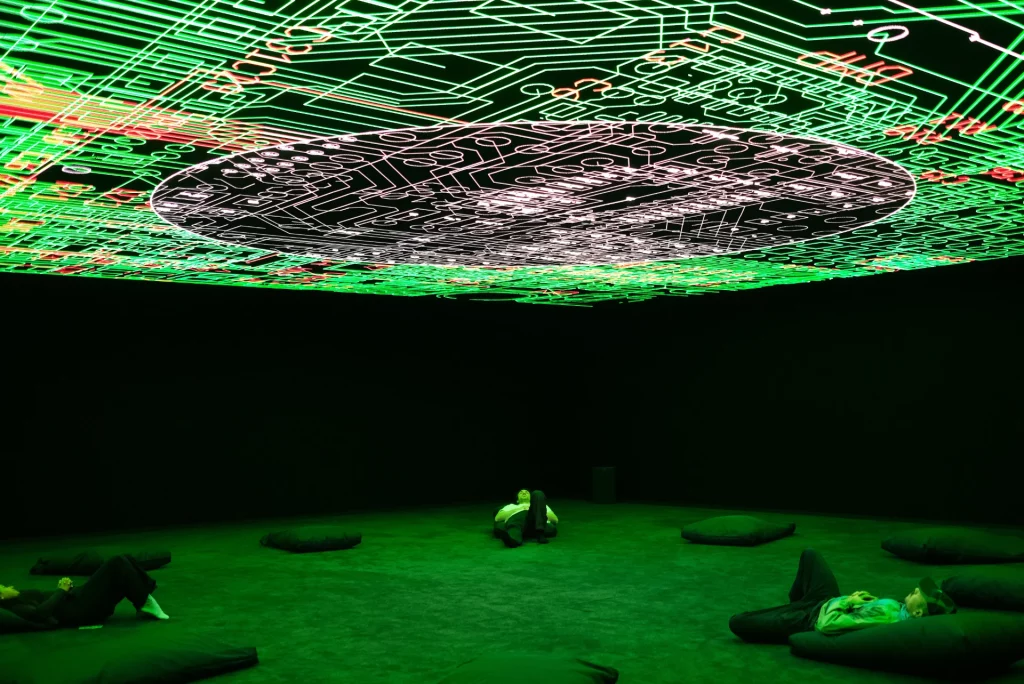
The installation, which invites visitors to lie down beneath a vast LED ceiling while being enveloped by Ikeda’s soundscapes, “charts the full spectrum of data in nature – from the microscopic world of particle physics to the macroscopic scale of astrophysics.”
Ikeda’s new work expands on ideas first explored in his acclaimed data-verse project, and is running alongside Paradigm Shift, an exhibition exploring revolutions in moving image culture from artists including Mark Leckey, Arthur Jafa, Derek Jarman, JulianKnxx, Martine Syms and Andy Warhol.
Tickets for data-cosm [n°1] are available now from the 180 Studios website.
Ryoji Ikeda
data-cosm [n°1]180 Studios
6 Surrey Street, London, WC2R 2ND
15 October, 2025 – 1 February, 2026
12pm–7pm, Wednesday – Sunday (Last entry at 7pm)Watch next: Ryoji Ikeda Presents: data-verse
The post Ryoji Ikeda installation data-cosm [n°1] extended at 180 Studios until 1 February, 2026 appeared first on Fact Magazine.
-
.png)
.png)
Chilean-born, New York–based artist TONI is shaping a fresh wave in Latin alternative pop with music that’s both high-energy and emotionally grounded. Her sound blends andino and carribean influences, hyper-pop edges, and a global pop sensibility that feels uniquely hers.
A graduate of NYU’s Clive Davis Institute, TONI has been featured in major Chilean outlets including La Tercera, Revista YA, SCD, and Canal 13’s documentary Sueño Americano, with additional appearances on national TV through TVN. She has performed at Bowery Ballroom, Elsewhere, The Sultan Room, Arlene’s Grocery, and other staple NYC venues.
TONI recently released three singles — “HELLO KITTY,” “AMÉN,” and “FLOW CHILENO” — leading into her upcoming debut album, a body of work that captures her bold, borderless approach to Latin pop.

-
This guest post was written by Christina Li from The Digilogue.
DIGIFAM! If you’re an independent artist, finding funding for your next creative project can feel like an uphill climb. That’s exactly why The Digilogue’s Artist Resources Program highlights music grants every month: to give our community of artists, producers, songwriters, and DJs access to real opportunities that help turn creative visions into reality.
But once you find a grant that fits, the next question is: how do you make your application stand out?
Over the past year curating grants for The Digilogue’s Artist Discovery Resources, we’ve seen what makes a strong application shine. Here are seven tips to help you write with clarity, authenticity, and purpose – and, of course, increase your chances of getting funded.
1. Start With The “Why”
Every grant has its own mission. Maybe it supports emerging voices, community-driven work, or artists from specific backgrounds or genres. Before applying, take time to understand why the grant exists and what kind of impact the funder wants to make.
Just as importantly, understand your own “why.” Why do you make the art you do? Why does this project matter to you and to your audience? Once you know both sides, the grant’s “why” and your own, you can see if they align. If they don’t, it might not be the right fit, and that’s okay. Choosing grants that truly resonate with your goals will save you time and lead to stronger, more authentic applications.
2. Define the Project Clearly
Almost every grant will ask you to describe what you’re requesting funds for, and this part takes real planning. Take a step back and think through your project before you apply. What’s the concept? The timeline? Who’s involved? How much support do you need? What kind of support do you need? What are the tangible outcomes?
Being specific shows that you’ve thought through the details. “I want to release an EP” is a starting point, but “I’m creating a five-track EP that explores my Asian-American roots through hyperpop production, to be recorded over three months and released with a community showcase” is a vision funders can get behind.
3. Tell Your Story Authentically
Grant readers don’t just want to fund projects, they want to invest in people. Your story, your brand, and your audience all play a role in how your work is received.
When describing yourself, go beyond the basics. What makes your artistry unique? What values or experiences shape your sound and your creative identity? Why do you create, and what do you hope people take away from your work?
This isn’t about trying to sound impressive, it’s about being genuine and clear about who you are as an artist. Authentic storytelling always leaves the strongest impression.
4. Set Clear, Realistic Goals
Many grants will ask you to share your short-term and long-term goals. These don’t have to be purely numbers-based. Think of them as creative milestones that reflect your values and vision.
Maybe your short-term goal is to finish an album that tells a specific story, and your long-term goal is to build a sustainable career performing internationally with a core fanbase. The key is to show that you have a direction and that this grant will help accelerate your journey, not define it.
5. Summarize Your Accomplishments
Some applications will ask about your artist journey so far. This is your moment to show the work you’ve already put in: not to flex, but to prove you’re serious and consistent about your craft.
Highlight key milestones: past releases, performances, collaborations, or community work. Show that you’ve already been building something meaningful, even without outside support. Funders want to see that their investment will amplify what’s already in motion.
6. Budget With Intention
A thoughtful budget shows you take your craft, and the funder’s money, seriously. Break down your costs clearly and realistically: studio time, production, mixing/mastering, visuals, marketing, tour support, etc.
Transparency goes a long way. You’re not just asking for money, you’re showing how you’ll make the most of it.
7. Get Feedback Before You Submit
Even strong applications benefit from fresh eyes. Ask a peer, mentor, or member of The Digilogue community to review your draft. They might spot gaps, unclear phrasing, or areas to strengthen.
And remember: not every grant will land, but every application helps you refine your voice and clarify your vision. No matter what, applying for a grant will undoubtedly help you better understand yourself and your goals as an artist, simply by forcing you to reflect and articulate your vision. As long as you keep track of where you’ve applied, learn from feedback, and stay consistent, you’ll be growing as an artist every step of the way.
Final Thoughts
Writing grants isn’t just about getting funding, it’s about understanding your artistry, your goals, and the story you’re telling the world. Every time you apply, you’re sharpening your creative vision and stepping closer to the opportunities meant for you.
Stay tuned to The Digilogue’s Artist Resources Program for monthly grant roundups and insights designed to help you take control of your creative career.
Follow @TheDigilogue, and sign up for our newsletter to get the latest resources straight to your inbox.
If you have a grant or funding opportunity to publish, please reach out to us at christina@thedigilogue.com.

-
This guest post was written by the team at DISCO.
As any music artist is all too aware, creation is only the first step in a song’s lifecycle. After writing and recording a song, then comes promotion, whether it’s to existing partners and collaborators or making new connections.
While there are seemingly endless ways to promote your music — from sharing on social media to pitching to blogs, music supervisors, podcasts, and playlist curators — the sheer variety of ways to get your music out there and into the right hands (or ears) can be overwhelming.
That said, understanding the most efficient ways to pitch for music promotion can have a tremendous impact on getting your work discovered by new collaborators and music industry partners. As the go-to file-sharing platform for music industry insiders, DISCO can help simplify the pitching process.
Here’s our step-by-step guide to help you pitch your music using DISCO.

-

Hometown: Chicago, IL / Lagos, Nigeria
Currently Based In: NY
Favorite Hobby: Basketball, Go-Karting & watching Formula 1
Favorite Artist(s): JMSN, Michael Jackson, Kanye West & Amy Winehouse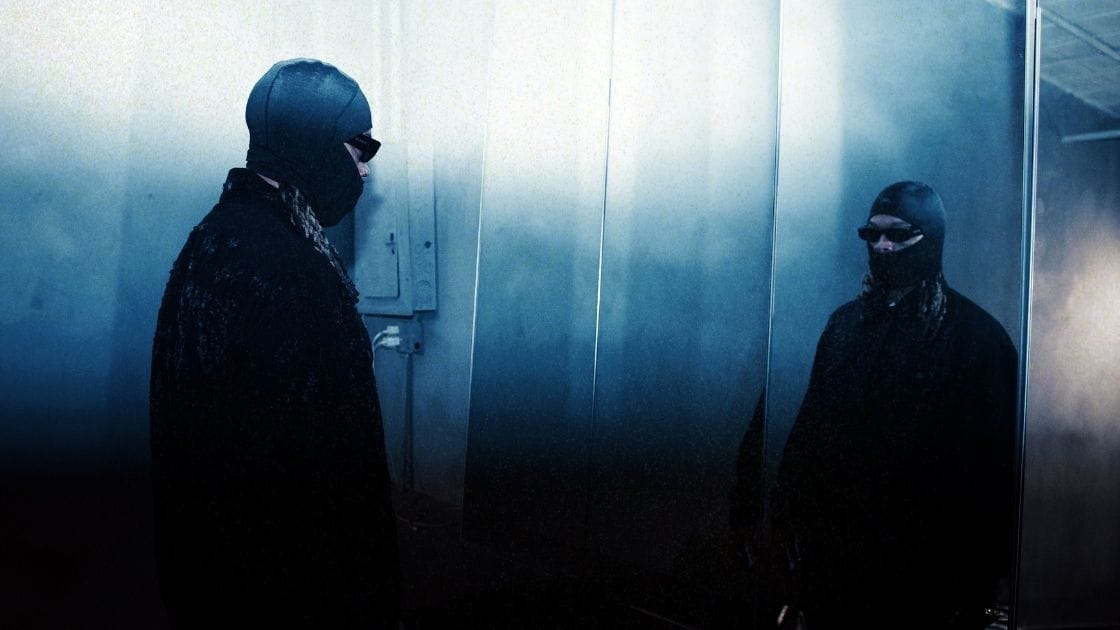
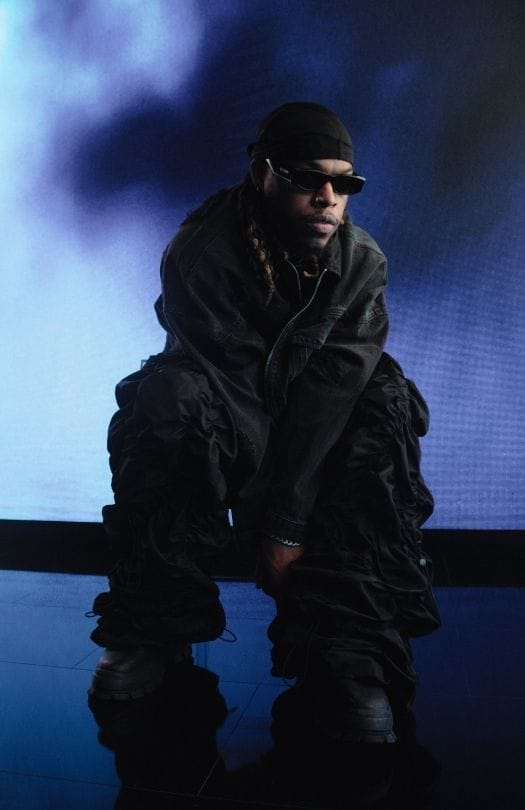
Uche is the kind of artist other artists can learn from. His path from Lagos to Chicago to New York has shaped a perspective that is both grounded and fearless, and you hear it in the way he blends sound, emotion, and vision with no rules attached. He creates by feel, evolves on purpose, and approaches his art with a level of honesty that is rare. In this interview, Uche opens up about process, identity, risk-taking, and what it really means to build yourself from the ground up. If you're an artist looking for clarity or inspiration, this conversation is one worth paying attention to.
Your story moves between Nigeria, Chicago, and now the UK creative scene. How has living in such different cultural worlds shaped your approach to building a unique sonic identity?
My world has always been very dynamic in its nature. I believe that has entirely shaped my perspective. So I believe in re-telling both mine & the world's truth in the barest form. Everyday you open your eyes as an artist you should tell the world what you see through your art.
You talk a lot about vision being your greatest asset. Can you walk us through how you translate a vision into a finished song, video, or concept?
Chasing & creating feelings. Evoking emotion or a tone/perspective from the world around me. Then understanding those feelings, allowing them to take me places and might even manipulate them to become more extreme. At the end, I tell the most compelling version of the truth.
You move fluidly between Hip Hop, RnB, and Afrobeat; how do you explore new sounds while maintaining a sense of “Uche” in your music?
Being completely honest, I just create. It’s not until after that I realize what worlds I’m bridging or pulling together. Whatever world I create I look for “Uche” in that world and follow whatever that is.
Your projects “HOW TO DIE” and “HOW TO LIVE” revolve around evolution and shedding versions of yourself. What advice do you have for artists who feel stuck in an old season of their life or artistry?
Let go. I have that tattoo’d on my neck as a reminder. We are owners of nothing, simply vessels for the experience. Appreciate your place in the puzzle and maximize it.
What have you learned about maintaining your mental and artistic balance while working in such a demanding industry?
Working on yourself as person is how you become a better artist. Personal growth & artistic growth are synonymous. Take care of yourself first & foremost and then look for ways to elevate that through your art.
You’ve had major milestones—from Charlie Sloth’s Fire in the Booth to a Nike campaign to festival performances. Which opportunity taught you the most about navigating the industry, and what should other artists know before stepping into bigger rooms?
Be extremely humble. Give yourself every opportunity to learn. The industry moves so fast, what was true yesterday can be obsolete & forgotten tomorrow. My relationships in the industry with higher positioned figures has really shown what's considered currency to people behind desks & decisions while ultimately revealing what’s most important to me. I then figure out how I want to exist in said spaces and create a much more favorable outcome for both myself and potential partners. Reverse engineering the industry this way has been huge in my career so far.
What’s a risk you took early on that felt dangerous at the time but fundamentally changed your career?
Being willing to fail. Publicly, personally, sonically… whatever it looked like. Whether that was not having a place to sleep or spending my last on music expenses. I’ve fallen so many times. Limiting the space that fear & negativity have to operate I believe I give the things attempting to work in my favor a bit more of a chance to succeed.
If you could outline a “development plan” for indie artists—things they must go through or practice in their first few years—what would it include?
Everyone’s journey is different so this is tough. But things & practices that helped me a ton were;
- Having to source or be the source of all the resources I needed to create a complete idea, i.e editing my own visuals, mixing, mastering & producing my music, understanding & creating my brand identity.
- I think shows are a huge step. Hearing your music live, seeing what people react to as well as building that confidence & presence.
- Studying the game to a T.
- Recording everyday.
- Isolating yourself and seeing how good your ideas feel when no one is hating or loving your creations.
- Be outside
How has Playlist Push contributed to your growth as an artist?
Being able to be playlisted on global playlists and have listeners from so many countries reach out to me explaining how they discovered me and how my music has impacted their world is huge. It’s allowed me to pull people in from all walks of life that truly feel like they share in my success and that’s really cool.
Looking to Promote Your Music?
Use our TikTok Music Promotion and Spotify Playlists Promotion service.
-


If you opened your Spotify app this week and felt like your playlists sounded different, you’re right. Spotify just rolled out a major shuffle update designed to fix one of the streaming app's longest-running frustrations: Repetition.
Spotify’s shuffle feature has been known to repeat songs you’ve heard a bunch already, even when shuffling your full music library. Users have historically complained about it being too repetitive and not playing songs you haven’t heard in a while.
Spotify calls it a “fewer repeats shuffle”, and for some, it’s the most meaningful update Spotify has released in a long time.
If you rely on shuffle for your daily listening, your workouts, your commute, or your massive saved playlists, this change will make everything feel smoother and more varied.
What Changed With Spotify Shuffle
Spotify’s old shuffle behavior wasn’t truly random. It leaned heavily toward your most-played songs, creating a repetitive loop that made big playlists sound small. The new shuffle system fixes that by:
- Spreading out songs more evenly
- Reducing back-to-back repeats
- Surfacing tracks you haven’t heard recently
- Making large playlists actually feel large
This applies whether you use the mobile app, desktop app, or Spotify Web.
Why Spotify Updated Shuffle
1. People were fed up with repetition
Self-explanatory.
2. Competition is growing
Competitors like YouTube Music and Amazon Music have been gaining market share every year. Shuffle randomness matters.
3. Better personalization
With tools like Smart Shuffle, Automix, and improved recommendations, this update fits Spotify’s bigger push for more dynamic listening. Check out our article about Spotify’s new DM feature here.
Smart Shuffle vs Normal Shuffle
A lot of users confuse these features, so here’s the simple breakdown:
- Normal Shuffle plays your music, now with fewer repeats
- Smart Shuffle injects recommended tracks into your playlist
If you only want your own songs, make sure Smart Shuffle is off.
How to Use the New Shuffle Settings
It’s already enabled as the default shuffle. I’ve included screenshots to avoid confusion with Smart Shuffle.
1. Open Your Spotify Playlist
Open any playlist you want to shuffle (your own or one you follow).
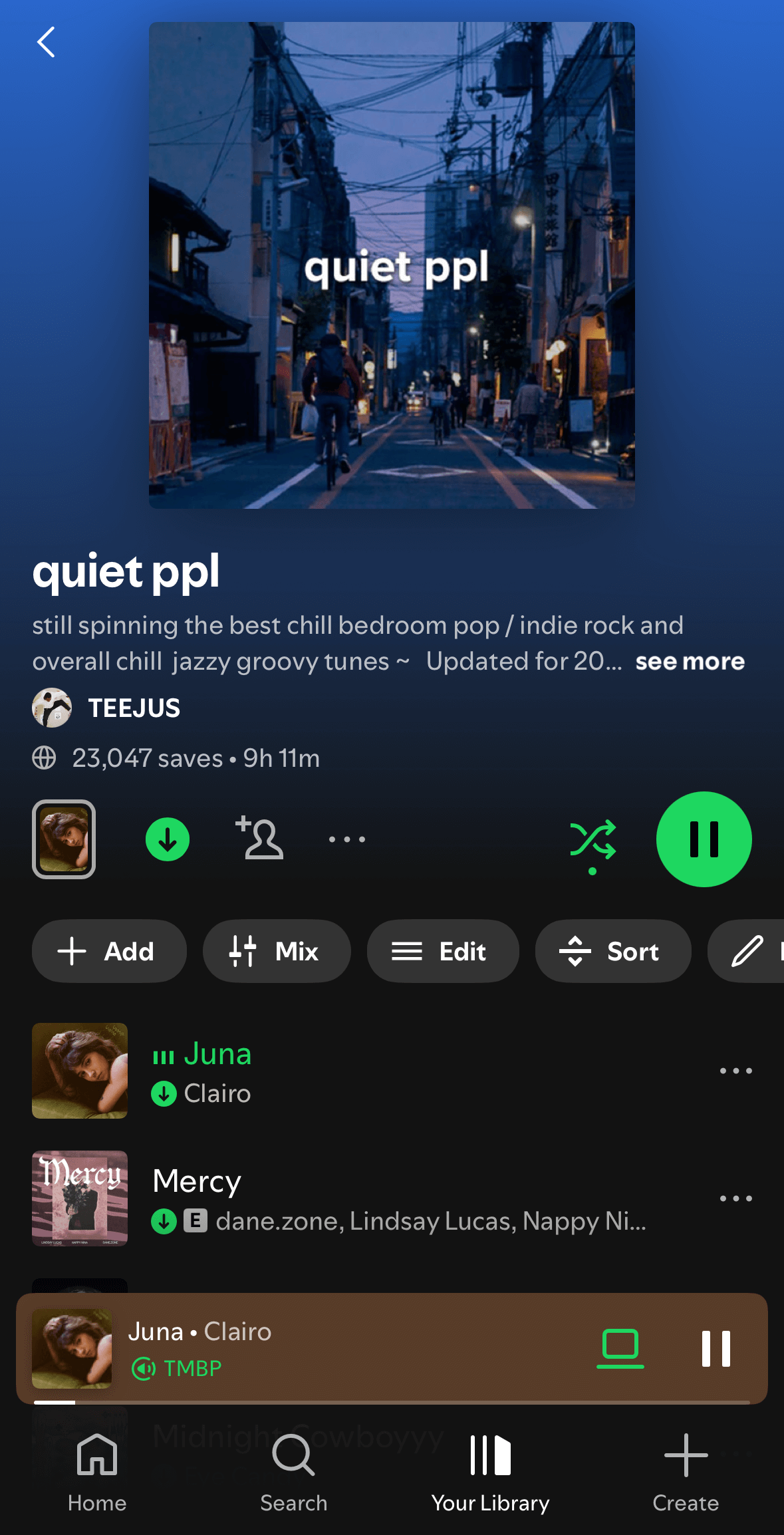
2. Tap the Shuffle Icon
At the bottom of the Now Playing screen, tap the shuffle button.
- Green Shuffle → normal shuffle

- Green Shuffle + Sparkles → Smart Shuffle

- Gray Shuffle → off

3. Make Sure You're on Normal Shuffle
Since the update affects normal shuffle, tap until the sparkles turn off.
This ensures you’re using the new “fewer repeats” system without Smart Shuffle recommendations.
How This Affects Playlist Creators
If you’re a playlist curator or aspire to be one, this update is a game-changer. More evenly distributed playback means:
- Your full playlist gets heard
- Listener retention increases
- Fewer early skips
- More variety per listening session
That makes playlist quality more important than ever. If you want to improve your curation, check out my 5 step guide to becoming the greatest playlist curator on Spotify.
How This Affects Artists
The “fewer repeats” shuffle update is great for listeners and even better for artists, especially those fighting for visibility in massive playlists. Before this update, shuffle wasn’t really shuffling. It leaned toward the same handful of tracks, which meant:
- Smaller artists got buried
- New releases didn’t rotate naturally
- Deep cuts barely surfaced
- Plays were clustered around the top of a playlist
Now that Spotify distributes playback more evenly, every track has a fairer chance of being heard.
Final Thoughts
Spotify’s redesigned shuffle finally fixes the most frustrating part of the experience: endless repetition. Whether you’re using shuffle casually or building structured playlists for your audience, this update makes listening feel fresh, balanced, and a lot more enjoyable.
FAQs
How to shuffle on Spotify iPhone?
Tap the shuffle icon on Now Playing.
What is Smart Shuffle Spotify?
A mode that adds recommendations.
How to turn off Smart Shuffle on Spotify?
Tap shuffle until sparkles disappear.
Does Spotify have lossless Audio?
Yes, Spotify now has lossless listening, learn more about why it’s a game-changer here.
How to make a playlist public
Edit playlist → toggle “public”
Looking to Promote Your Music?
Use our TikTok Music Promotion and Spotify Playlists Promotion service.
-
This guest post was written by team at Muse.
When the world went remote after Covid, every industry had to rethink how people work together. For musicians, it was especially challenging – creativity thrives on connection, and making music apart just didn’t feel the same.

-
Emerging R&B/Soul artist Sami is making her mark with her debut EP, “Too Many Days Since Then”—six tracks of emotion, release, and looking toward what’s next. The 12-minute EP, produced by two-time Grammy Award winner Brian “Killah B” Bates, is a breath of fresh air for the R&B scene. Sami brings vocals, vulnerability, and that … Continue reading Sami delivers raw vocals, emotion with debut EP “Too Many Days Since Then”
The post Sami delivers raw vocals, emotion with debut EP “Too Many Days Since Then” appeared first on ThisisRnB.com – New R&B Music, Artists, Playlists, Lyrics.